Clark Kent · Superman
Batman the Dark Knight Returns 10th Anniversary Edition HardcoverClark Kent / Superman occupies a distinctive position in The Dark Knight Returns: he is not merely another costumed hero but the visible instrument of official power. His extraordinary abilities make him capable of intervening in international crises and domestic disorder, yet that capacity also places him opposite Bruce Wayne / Batman, whose return rejects dependence on the state. Their eventual confrontation gives the story its sharpest contest between institutional authority and private moral conviction.
Identity and Political Position
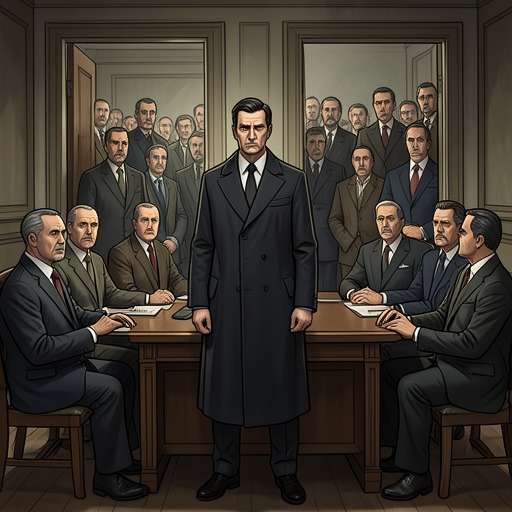
Clark Kent / Superman is presented as a figure who has accepted a role within the existing political order. Where Bruce Wayne / Batman acts outside official structures, Clark Kent / Superman operates in alignment with the government and its strategic interests. That difference is fundamental rather than incidental: the two men possess comparable symbolic authority, but they answer to different sources of legitimacy. Batman claims responsibility to Gotham City and to his own uncompromising code; Superman’s public function is tied to the preservation of governmental stability.
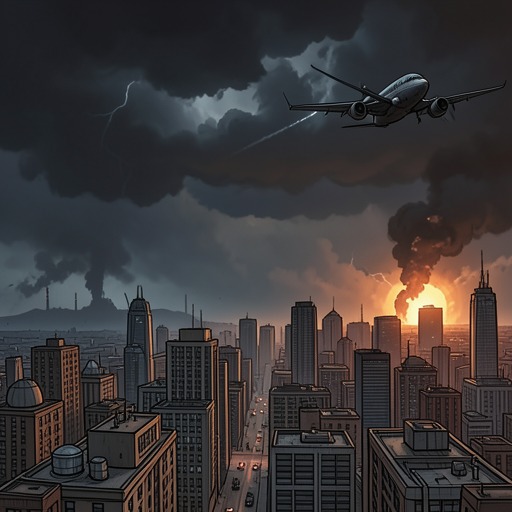
This alignment makes Clark Kent / Superman an emblem of a broader security dilemma. Actions described as protective by one side can appear threatening to the other, particularly when the actors possess overwhelming capabilities. International tension, military escalation, and the possibility of nuclear catastrophe form the background against which Superman’s loyalty is measured. His power promises order, but the same power intensifies the danger created when independent and official guardians no longer recognize one another’s authority.
Earlier Presence and Foreshadowing
Before the final clash, Clark Kent / Superman’s importance is established through the widening scale of the narrative. The story moves from Gotham City’s social decay and street violence toward conflicts involving national command, international danger, and weapons capable of affecting entire populations. Superman belongs to that larger arena. His presence therefore expands the meaning of Batman’s return: the revival of one aging vigilante is not only a local response to crime but a challenge to the political arrangement that has kept extraordinary individuals under control.
The contrast with Bruce Wayne / Batman grows as Batman gathers influence among people who regard him as a source of direction during institutional failure. Batman’s methods are coercive and dangerous, but they are also depicted as a direct answer to conditions that official authority has failed to resolve. Clark Kent / Superman represents the opposite solution: preserve order by accepting the commands of the state. Their eventual encounter has been prepared as a collision between two answers to the same crisis rather than as a simple contest between hero and villain.
Conflict with Bruce Wayne / Batman
The confrontation between Clark Kent / Superman and Bruce Wayne / Batman is the decisive expression of their opposed loyalties. Batman does not meet Superman as an ordinary criminal confronting an officer of the law; he prepares for an adversary whose strength, speed, and resilience can overwhelm conventional resistance. The encounter consequently depends on planning, specialized equipment, concealment, and the exploitation of Superman’s assumptions about Batman’s condition. Batman’s strategy turns the contest into a struggle over preparation and will as much as physical power.
Superman’s participation also reveals the cost of serving official authority. He is powerful enough to stop Batman, but his intervention places him in the position of enforcing a prohibition against a man whose actions have made him a symbol of resistance for many in Gotham City. The conflict thus carries a moral and political charge that neither combatant can reduce to personal animosity. Batman sees Superman’s obedience as submission to a system that has allowed the city and the wider world to deteriorate; Superman treats Batman’s independence as a destabilizing threat that must be contained.
The fight is shaped by mutual recognition. Each man knows what the other can do, and each understands that a direct contest risks consequences beyond the two bodies in the street. Batman’s use of the Armored Batsuit and other preparations narrows the gap between human vulnerability and superhuman force, while Superman’s endurance confirms why the government relies on him. Their opposing capabilities create a form of deterrence: neither can act without calculating retaliation, misjudgment, and the possibility that the struggle will become a public catastrophe.
Consequences and Hidden Resolution
The apparent outcome of the battle presents Bruce Wayne / Batman as defeated and dead, allowing the state to believe that its most dangerous independent opponent has been removed. That result is part of Batman’s larger design. Bruce Wayne / Batman stages his death rather than surrendering the mission, converting the public end of Batman into the concealment necessary for a new phase of resistance. Clark Kent / Superman therefore helps produce the conditions under which Batman can disappear from official scrutiny, even though Superman’s purpose is to end Batman’s intervention.
The final revelation changes the meaning of Superman’s victory. He has not simply destroyed an outlaw; he has participated in a confrontation whose apparent conclusion masks Batman’s survival and future plans. When Superman recognizes the deception, his response is not the destruction of the remaining movement but an acknowledgment that the conflict has shifted. Batman’s survival, the continued existence of his allies, and the prospect of training a new generation transform the duel from a final cancellation into an unresolved transfer of power.
Narrative Role and Significance
Clark Kent / Superman functions as Bruce Wayne / Batman’s most formidable foil because he makes the story’s political argument physical. Batman is aging, injured, secretive, and dependent on tactics; Superman is nearly invulnerable, publicly recognized, and backed by governmental authority. Yet the apparently weaker figure controls the terms of the final encounter through foresight and commitment. The contrast prevents power from being treated as identical with legitimacy. Superman can possess greater physical capacity while Batman retains the initiative over meaning, secrecy, and succession.
His role also complicates the boundary between heroism and authority. Clark Kent / Superman is not reduced to a conventional villain: he acts from a protective position and embodies the promise that immense power can be used to prevent wider disaster. At the same time, his obedience exposes the danger of allowing a singular superhuman figure to become an extension of state policy. Against him, Batman’s methods remain ethically troubling, but the narrative uses their conflict to ask who should decide when law, security, and justice diverge.
By the ending, Clark Kent / Superman has become the guardian of the order that Bruce Wayne / Batman seeks to evade and revise. Their confrontation leaves neither position untouched. Superman’s superior force cannot permanently extinguish Batman’s ideal, while Batman’s victory through deception cannot erase the real danger posed by unrestrained escalation. Their relationship therefore closes not with reconciliation but with a new equilibrium: the government still possesses its superhuman champion, and Batman’s cause survives underground, prepared to continue beyond the identity that Superman believed he had defeated.